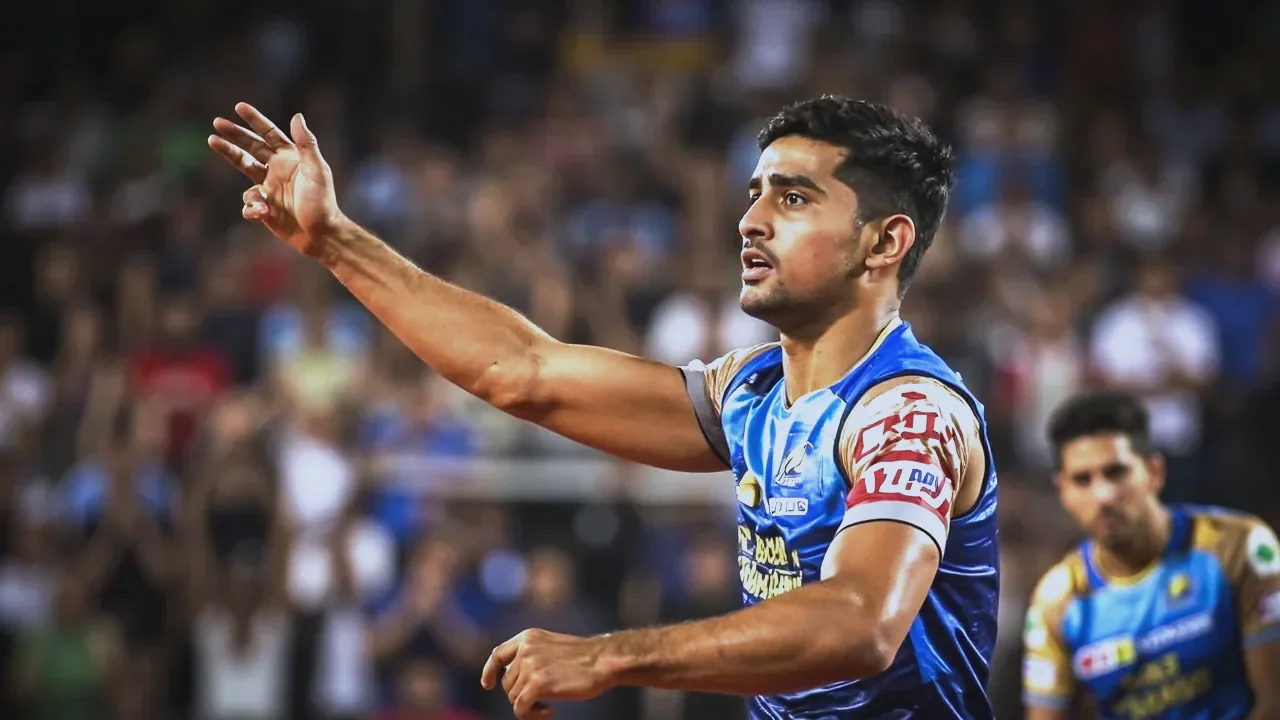
Md Mudassar Hussain is the latest name to move from the TG20 auction conversation into Warangal Warriors' announced squad picture. The official TG20 Instagram account published the update on June 7, 2026, describing the raider as a player whose fiery pace drew big bids. The post names the player, the franchise and the event. It does not publish a bid amount, a contract length, a match schedule, an injury update or a confirmed starting-seven role.
That distinction matters for fantasy kabaddi. An auction announcement is a meaningful squad signal, but it is not the same thing as a team sheet. The useful early read is therefore about role, opportunity and what to verify next. Mudassar arrives with a pace-first description and a new franchise context; the fantasy decision must wait for evidence about selection, raid share and match availability.
The confirmed TG20 auction record
The announcement came from @tg20official, the official TG20 league account. Its caption says that Md Mudassar Hussain will offer his “fiery pace” to Warangal Warriors after attracting big bids. The opening line uses a Hinglish phrase — “Dus bahaane karke le gaya bid, Mudassar!” — before the English description and the #TG20 and #TG20Auction tags. That is the complete public claim used here.
The date is also clear. Instagram records the post on June 7, 2026, and the source dossier records the same date. The post had 1,480 likes and 20 comments when it was fetched, but those engagement figures do not establish the size of the bid, the player's past fantasy output or the franchise's tactical plan. They are context around the announcement, not evidence for a player projection.
Warangal Warriors winning the bid is the central squad fact. Mudassar's position is described as raider or attacker, and pace is the specific quality highlighted by the league account. No separate official statement in the assigned source identifies him as captain, lead raider, substitute or starting-seven lock. Those labels should stay out of a pre-selection fantasy model.
Why a pace-led raider changes the early fantasy conversation
Raiders turn movement into fantasy opportunity because every attacking appearance can create several paths to points: a successful touch, a bonus, a multi-point raid or a comeback from a difficult defensive situation. That is a framework for reading the position, not a claim about Mudassar's numbers. The source gives no raid totals, success rate or playing record, so a responsible early note should avoid attaching a projected average to his name.
Pace can still be treated as a scouting clue. A raider described that way may attract attention because quick acceleration can change the shape of a raid before defenders settle. For fantasy players, the question is not whether the adjective sounds exciting; it is whether the franchise gives that quality enough court time to matter. A player can be highly valued at auction and still require a gradual route into a match rotation.
The new franchise also changes the context around every future selection. A raider's value depends on who takes the first raids, who closes tight chases, which players share the mat and whether the coach protects a lead or keeps attacking. None of those details are supplied by the Instagram caption. They become verification points when Warangal Warriors release a squad list, match preview or starting seven.
The four checks fantasy players should make next
First, confirm selection. The cleanest follow-up is an official Warangal Warriors or TG20 team announcement that names Mudassar in the match squad. An auction pick proves franchise ownership of the player; it does not prove that he is available for every fixture. A fantasy lineup should not treat the auction post as a substitute for the final team news.
Second, identify raid share. The important question is whether Mudassar receives early raids, late pressure raids or a smaller rotation role. Early raids can offer volume, while late raids can offer high leverage but fewer total opportunities. Until an official lineup or match report reveals the pattern, the right label is watchlist rather than automatic captain.
Third, check the defensive shape around him. A new raider becomes easier to assess when the rest of the seven is known. Strong support can create safer attacking situations; a thin support structure can force a raider into higher-risk attempts. That is interpretation, not a fact about Warangal Warriors, and it should only be used after the supporting names are confirmed.
Fourth, check the fantasy platform's position and credit treatment after the player is listed. A raider may be displayed under a different label, and the price will determine whether the move is useful for balanced builds. The source contains no salary or scoring information, so no price-based recommendation can be made from the announcement alone.
Captain, vice-captain and differential lanes
Mudassar belongs in the differential conversation before he belongs in the captain conversation. That is not a dismissal of the auction signal. It is a safeguard against turning a short caption into certainty. Captain multipliers magnify both opportunity and absence; an unconfirmed raider can lose value before the first raid if he is not selected or shares too few attacks.
A measured pre-match approach would place him in a small number of exploratory lineups only after the official seven is published. A vice-captain slot can be considered when his raid role is clear but his workload is still less certain than the established lead options. A captain slot needs stronger evidence: confirmed availability, a prominent attacking role and a contest format that can absorb the risk.
The most useful comparison will be role-based rather than name-based. If Mudassar is the first attacking option, his ceiling comes from volume. If he is the second or third raider, the ceiling comes from efficiency and match state. If he is a substitute, the selection is entirely dependent on the coach's rotation. These are three different fantasy profiles, and the auction announcement alone cannot tell us which one will appear.
What the source does not establish
Several tempting claims would go beyond the record. There is no verified bid figure, so the phrase “big bids” cannot be converted into a ranking or a price band. There is no official injury report, so the announcement cannot be used to say that Mudassar is fit, returning or carrying a concern. There is no match date, venue, opponent or confirmed team list in the post.
There is also no evidence for a historical comparison with Pro Kabaddi League players, no career raid count and no independent scouting report in the assigned source. Those details may become available through later official team material, but adding them now would make the story look fuller while making the factual foundation weaker. The cleanest editorial line is to separate what TG20 announced from what fantasy players still need to learn.
How to read the next official update
The next useful announcement will likely be specific rather than dramatic: a roster entry, a match squad, a starting-seven graphic or a match report that records his first attacking workload. Look for the wording around his role, not only his name. “Named in the squad” confirms availability for that fixture. “Starting seven” confirms selection. A raid-by-raid match report begins to show opportunity. Those are progressively stronger pieces of fantasy evidence.
When the first confirmed lineup arrives, compare the role with the auction description. If the pace-led raider is trusted with regular attacks, the move has a clear fantasy route. If he is used sparingly, the auction story remains a squad-building development rather than a ready-made pick. If he is absent, the correct response is to remove him from the lineup and wait for a new team update, not to force the original announcement into a prediction.
A simple watchlist can keep the auction story useful without overstating it. Record the announcement date, the franchise named by the official account and the role description attached to the player. Then leave three blank fields for the first team-sheet update: squad status, starting-seven status and likely raid position. That small discipline prevents a familiar fantasy mistake — treating a memorable auction caption as if it were a completed match preview. It also makes later updates easier to compare because the confirmed record remains separate from fresh interpretation.
The same approach applies to captain picks. Start with the players whose court time is confirmed, then assess Mudassar only when Warangal Warriors provide the missing role evidence. A pace-led raider can be attractive for a large-field differential, but a differential works only when the player is available and involved. Until those two conditions are visible, the strongest information in the story is the franchise move itself.
The immediate fantasy takeaway
The TG20 announcement gives fantasy kabaddi players one solid new name to monitor: Md Mudassar Hussain, a raider selected by Warangal Warriors after attracting big bids at the June 7 auction. The pace description makes him interesting, but interest is not a points projection. The responsible early position is watchlist, with captain and vice-captain decisions held until selection and raid share are confirmed.
The next meaningful checkpoint is Warangal Warriors' first official team update that places Mudassar in a match context. Until then, build around confirmed players, keep the new raider in a differential file and treat every unverified detail as unknown. For continuing Pro Kabaddi League injury, squad, lineup and captain-pick updates, follow Fantasy Kabaddi and return to the final seven rather than the auction headline when locking a team.